
As part of our ongoing Internship Spotlight series, we’re thrilled to feature Alex Syrenova (ARAD ’25), whose year-long internship at the Whitney Museum of American Art exemplifies the power of intentional, justice-driven work within cultural institutions. Working in the Access and Community Programs department, Alex has contributed to vital initiatives that center disability justice, cross-departmental collaboration, and mentorship. In this interview, they reflect on the complexities of institutional access work, the value of relational knowledge, and the lessons learned through systems-level thinking—offering insight and guidance for peers navigating the evolving landscape of arts administration.

Could you provide an overview of your current internship and the organization you are working with?
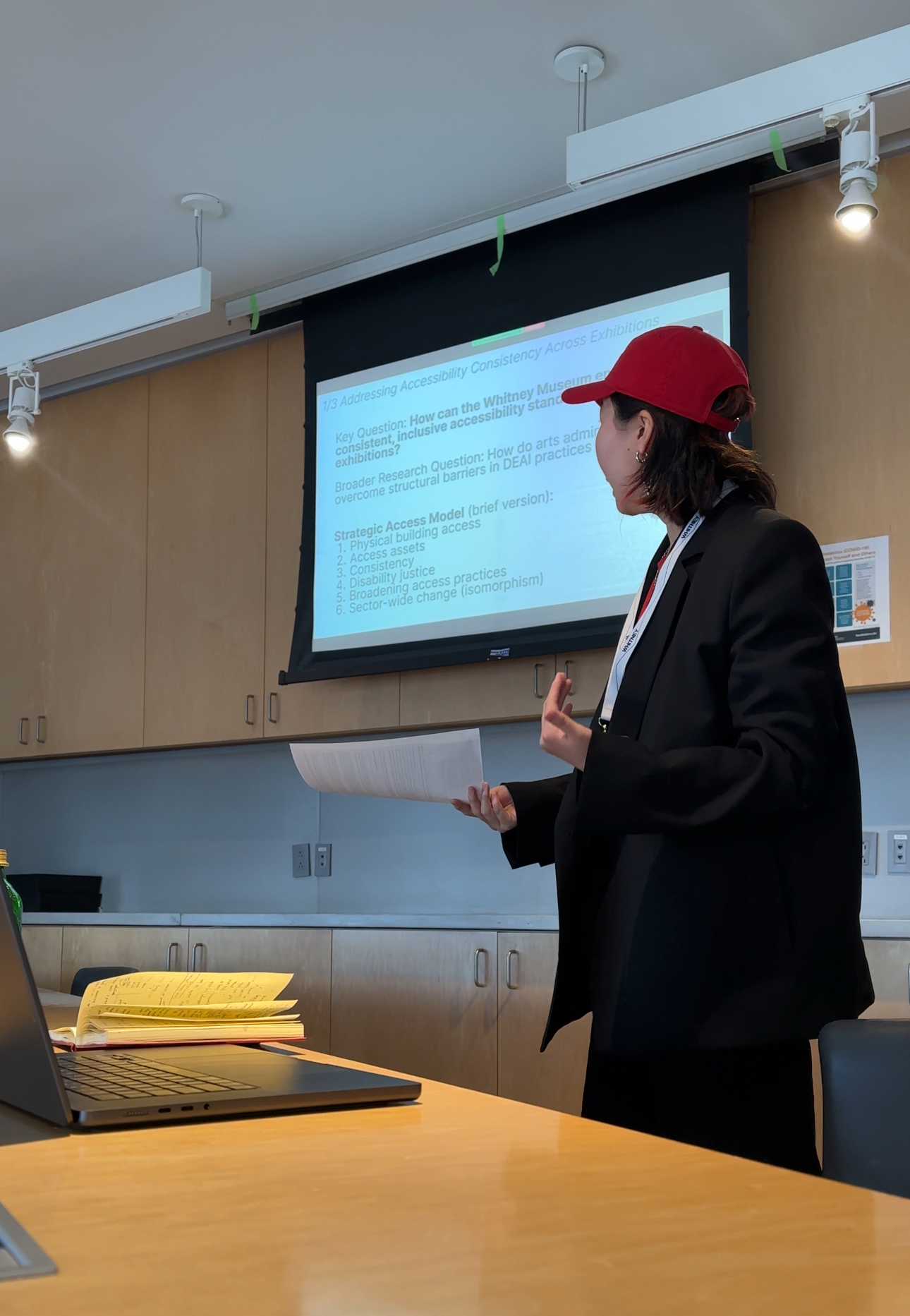
I’ve been interning at the Whitney Museum of American Art for both the Fall and Spring semesters in the Access and Community Programs department. The Whitney’s strong commitment to diversity, equity, accessibility, and inclusion aligns closely with my own research interests. My role centers on improving accessibility through a framework rooted in disability justice. I’ve contributed to the creation of access assets such as verbal descriptions and large print materials, and served on DAAWG—the museum’s cross-departmental task force on access. In addition, I conducted qualitative research aimed at helping the museum establish consistent, inclusive accessibility standards across departments, and mentored another intern, particularly in developing digital skills.
What does a typical day look like during your internship?
I structured my in-office presence to align with meetings and public programming, so a typical day is intentionally designed to support both collaborative and programmatic work. I usually begin by preparing for upcoming meetings—reviewing agendas and notes—then attend team or cross-departmental meetings. After that, I focus on in-progress access assets, such as editing verbal descriptions, reviewing transcripts, or listening to audio recordings. If programming is scheduled, I assist with setup and support, including meeting guests in the lobby. Each in-person day tends to balance independent work, collaboration, and direct engagement with visitors or staff. When I’m working remotely, I usually focus on access asset development or research.
Were there any key projects or assignments during the internship?
Yes, several. One of the key projects I worked on was conducting qualitative research to help the Whitney establish consistent, inclusive accessibility standards across departments, which resulted in a strategic access model. I also developed and edited access assets such as verbal descriptions and large print guides. Another significant project involved creating a neuroinclusion resource for educators, as well as a clear and streamlined internal guide for generating QR codes, which addressed a previously confusing process. In addition, I mentored another intern and created a computer basics guide with practice exercises.
Based on your experience, what guidance would you offer our students seeking internships in the related organization?
Based on my experience, I would recommend a few things. First, ask someone familiar with U.S. hiring practices to review your application materials—even small adjustments in tone or structure can make a difference. Second, learn not just about the organization, but also about the people you want to work with. Read what they’ve published, look up any talks or conferences they’ve presented at—this can help you understand the ethics, values, and working styles of your future collaborators in the best-case scenario, or at least give you a more holistic view of the field’s inspiring actors. And finally, don’t create barriers for yourself—the world will do that for you.
How has this internship shaped your understanding of the art industry, and what skills have you found most valuable?
I came into this internship hoping to learn how large institutions in the U.S. operate, and I did—but what I found even more transformative. I saw leadership examples that protect people by managing systems, agency and resilience in action, and experienced mentorship that centers relational knowledge. When I was asked in the initial interview what I hoped to learn, I said I wanted to learn something beyond my current understanding, filling a gap I hadn’t yet identified. And I learned exactly that.

 Arts Administration
Leave a comment