
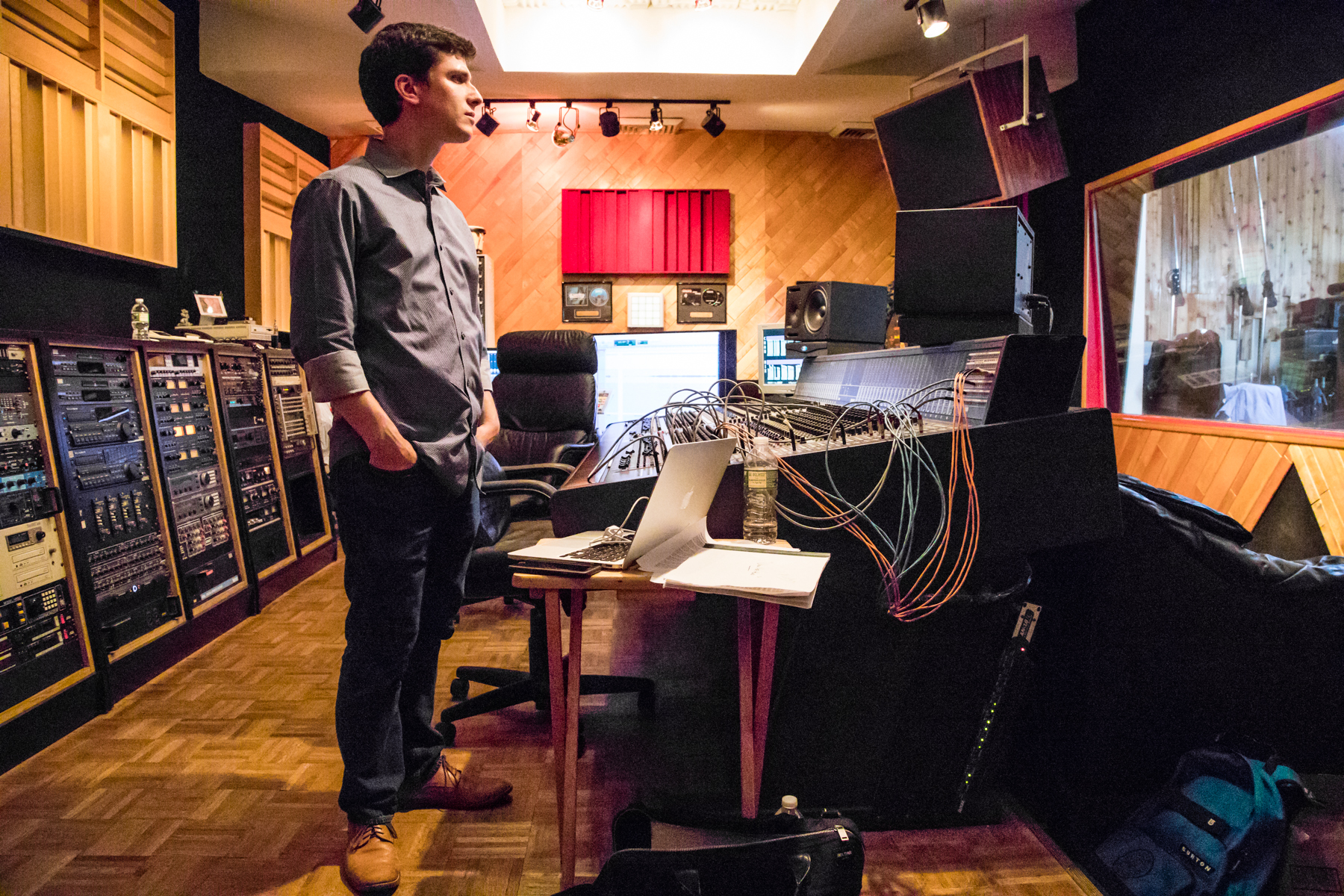
Eric Oberstein is a 2x GRAMMY and 2x Latin GRAMMY-winning producer, artist manager, curator, consultant, and educator. A respected and trusted arts leader, he is founder of Eric Oberstein Productions, an NYC-based artist management and producing company, serving as a collaborator and guide to adventurous, culture-changing artists, as well as an arts management consultancy, curating transformative programming and advising cultural organizations on strategy. With a long track record of working with prominent artists and arts organizations, Oberstein has developed a career building environments that help artists and organizations achieve their goals.
Professor Eric Oberstein shares more on his experience with ARAD and his new course, Creative Producing in the Performing Arts

1. How does Creative Producing in the Performing Arts support the broader goals of the ARAD program?
In your view, why is creative producing an essential skill set for emerging arts administrators today?
The course, Creative Producing in the Performing Arts, is intended to be a very hands-on approach to applying skills learned in the ARAD program. Especially for students who are interested in developing new artistic projects, the course pulls back the curtain on participating in and supporting the creative process. The course is intended to take all that students learn in the ARAD program — including understanding art-making and artistic production, budgeting, fundraising, marketing, arts law, and many other concepts, and have students apply these building blocks to their own creative producing project — a project they want to work on in real life, or at least a project they could in theory see themselves executing at some point.
I teach the foundations of Creative Producing, with a focus on developing new artistic work — from the seed of an idea through launch and beyond. Students learn about the critical role that producers play in new work development, how to help bring creative ideas to fruition, and how to build environments for artists to achieve their goals. Whether developing one’s own artistic work, or serving as a collaborator with artists, the course covers best practices across artistic disciplines, and business settings — non-profit and commercial, institutional to independent.
Creative Producing skills are essential for emerging arts administrators today, as it’s critical that we understand as arts administrators what artists need to do their best work, and how to bring artistic projects to life. The work demands that we have vision, be flexible and iterate as conditions change, know how to lead teams, and how to support a living, breathing process. I always say, “We deal with humans, not widgets.” That requires special sensitivity and awareness, and an ability to develop relationships and build trust with artists and collaborators.
2. How do you define “creative producing,” and how does your approach in this course expand or challenge more traditional ideas of producing in the performing arts?
For me, Creative Producing is the process of blending artistic vision with business strategy to bring artistic projects from the seed of an idea to fruition. Creative producers provide artistic and administrative infrastructure to help artists and organizations achieve their artistic goals, serving as a driving force for all stages of a creative project.
Producers serve as creative collaborators and project managers, both caring for and serving as point on a project. Producers are a go-between for all parties involved in the development of new work, including artists, managers, agents, presenters, funders, donors, marketing, press, education and community engagement partners, and other entities.
My approach in the course is meant to both expand and challenge traditional ideas of producing in the performing arts. Students are working in rapidly evolving arts ecosystems, and that requires skills, sensitivity, and values to do this work in a meaningful and effective way. It also happens not just in big institutions but in independent settings, with large budgets and smaller budgets. You must be agile to do this work, and you must be OK with uncertainty — this is critical for the contemporary creative producer and arts administrator.
3. What kinds of projects, case studies, or real-world scenarios do students engage with in the course, and why did you choose those as core learning tools?
I’m pulling from articles, case studies, texts, and media, as current as possible, to provide real-world examples of Creative Producing. While Producing has been around for a long time, it’s generally less understood than Arts Administration and other codified types of work in our field. There are also different types of Producers (creative producers, financial producers, and other types), so I’m trying to demystify what the work is and what the different types of producing mean. We’re looking at everything from how Hamilton was produced, to the creation of Bad Bunny’s recent Super Bowl halftime show, as well as examples from music, dance, theater, installation, and multidisciplinary projects. I’m also pulling from real projects I’ve produced in my career and showing them what was done, from soup to nuts.
In addition, I’m bringing in a few guest speakers — both creative producers and artists — to talk about their work and approaches to Creative Producing. Students are also meeting with a Creative Producer and/or artist they admire to better understand their work and their approaches to Creative Producing.
I choose these people and resources because I want students to have both historical but especially contemporary models for how this work is done at a high level, and with varying levels of complexity, so they can apply these examples to their own Creative Producing work.
4. How does the course prepare students to navigate the artistic, logistical, and ethical complexities of producing work in today’s performing arts landscape?
What practical skills do students walk away with?
The course is fully intended to equip students with the understanding of how to navigate the many complexities of producing artistic work in today’s landscape. We talk in great detail about the many layers and constantly shifting considerations of doing this work, how producers need to be both present in the moment to support artistic creation, but also 100 steps ahead of everyone else, having the vision, but also the ethical grounding, to do this work and to understand the complex contexts in which we do the work.
In terms of practical skills, students learn how to successfully create an artistic project treatment/pitch, budget, fundraising strategy, hiring plan, production plans (pre- through post-production), touring plan, and audience engagement strategy. Students learn to become confident in speaking effectively with artists, funders, and collaborators about their projects (the students get lots of practice speaking with the class and one another about their projects). Students also envision and plan a life for their projects beyond the classroom, so that they can take their Creative Producing skills out into the world.
5. How do collaboration and artist-administrator relationships show up in the classroom?
What do you hope students learn about working with artists, institutions, and communities through a producer’s lens?
Collaboration and artist-administrator relationships are essential to Creative Producing work — we spend a lot of time talking about building creative teams, and ways to support artists’ work as a Creative Producer. We talk about the team members a Producer might need to hire for their projects, and why these people are critical to the process. We also discuss listening skills, and understanding of the art forms at play, so that creative producers are fully fluent in the many nuances of this work and can build trust with artists.
My goal is that students will learn to be comfortable working with a broad range of people, institutions, and communities. This is some of the most complex work we can do as arts administrators — I want students to take all that the ARAD program teaches them, hone their instincts, and have fun doing the work! Students are facilitating and supporting the creative process, carrying not only the skills of effective organizers, but also the instincts of practicing artists. Their ability to develop and nurture relationships will be the key to being strong Creative Producers.
Read more about Eric Oberstein and his artist management and producing company, Eric Oberstein Productions, on his website and social media:
Instagram: @ericoberstein and @ericobersteinproductions
 Arts Administration
Leave a comment