
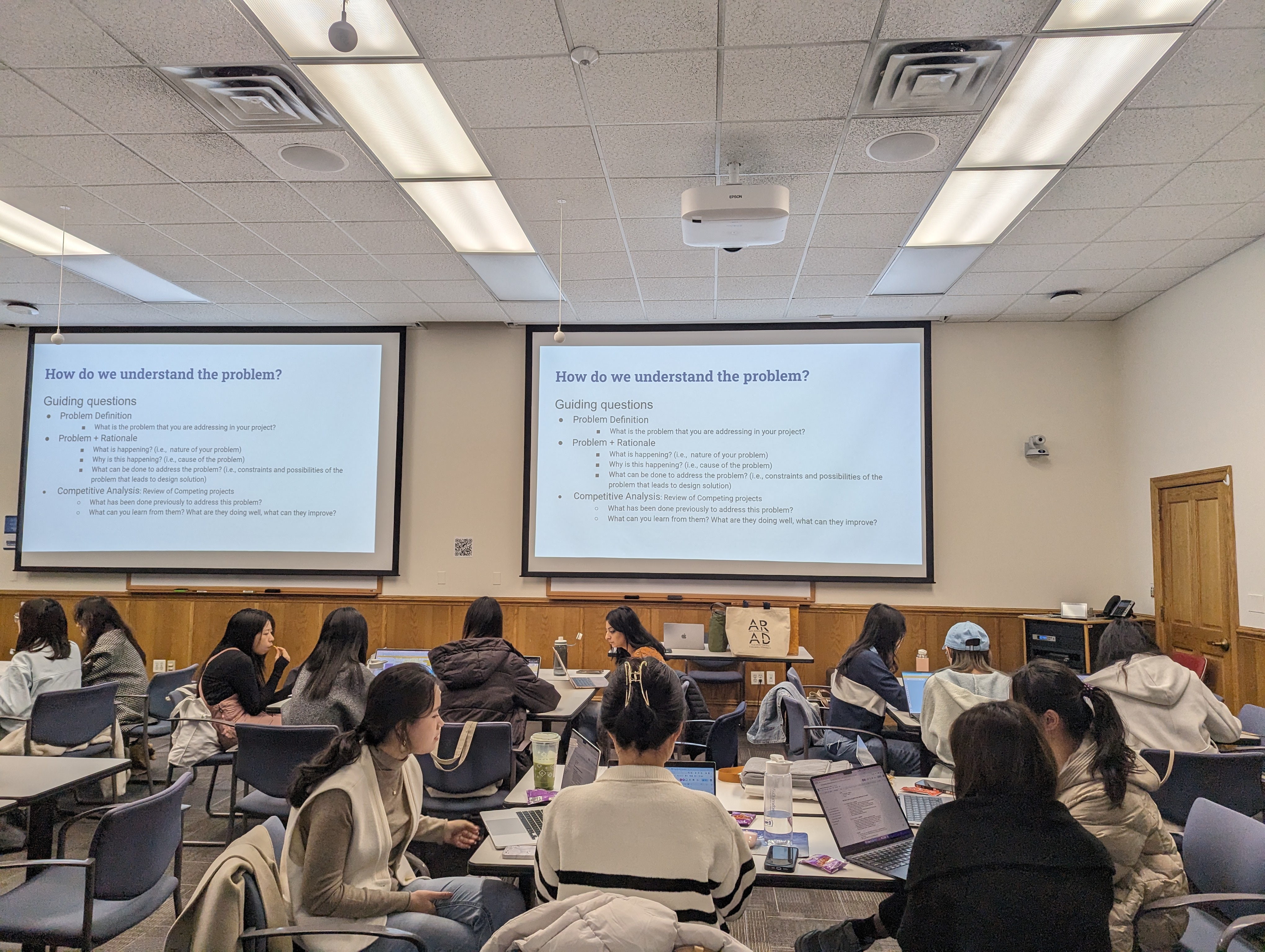
In an intense three-day series of workshops spanning one cold weekend in November, ARAD collaborated with the Communications, Media, and Learning Technologies Design (CMLTD) program on Teachers College campus to speculate and design new ideas for the arts and culture.
This design jam is part of ARAD’s microcourse programming for professional development. It is also notably the first time ARAD professional development program is shared with the educational technology sector at Teachers College. With arts administrators as stakeholders in digital tools created by designers as technologists, the design jam served as a space for these two parties to come together to envision futures for arts spaces and design concrete visions for these futures together. ARAD Program Manager Grace J. Choi, a graduate of the CMLTD program, organized the design jam to bring in Dr. Jin Kuwata and Dr. Yoo Kyung Chang, CMLTD Lecturers, to share their expertise on the Design Thinking Process throughout the three days.

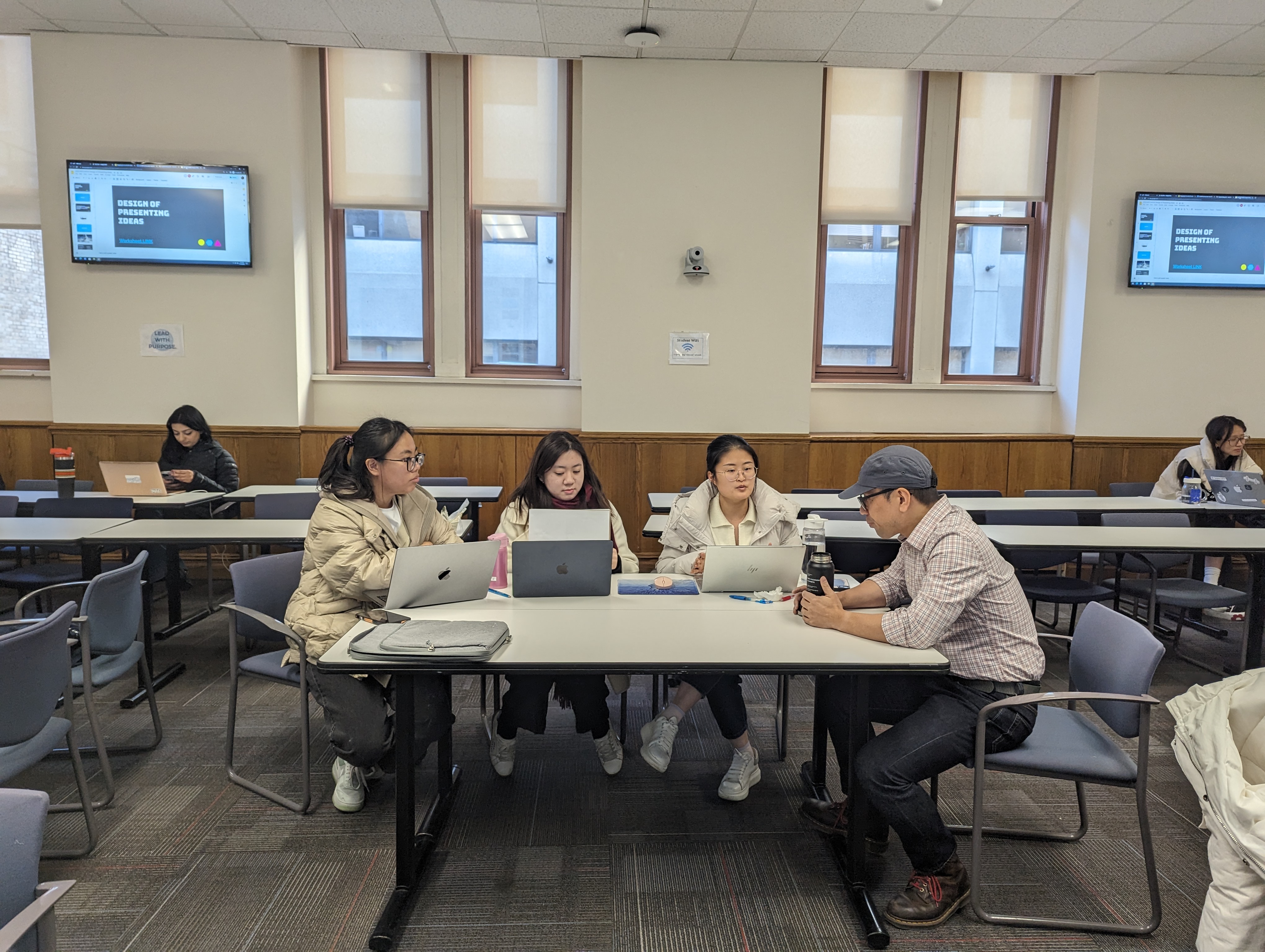
Design Thinking plays a major role in CMLTD’s annual spring Innovation Award program, which is now supported by the Digital Futures Institute; this design jam serves as a more interdisciplinary approach to the human-centered methodology utilized across industries for problem-solving and solutioning audience needs to have more focus on ill-structured problems in the arts and culture sector. The design jam microcourse instructional roster also included long term product designer Dennis Morgan, Jr., who took charge of the second day’s workshop session to introduce and demonstrate Figma, a collaborative interface prototyping tool which was later used by participating ARAD and CMLTD students to construct wireframes and prototypes for their resulting digital interface solutions. Across the three days of design and strategy workshops, students learned to use Miro as a groupthink tool for archiving, mind-mapping and user journey creation, and communicated with each other using Slack as a social, professional, and project management tool. To empathize with and communicate more effectively the narratives deduced in their problem spaces and solutions, students also tinkered with generative AI image engines to supplement their Figma prototypes and bring their ideas to life.
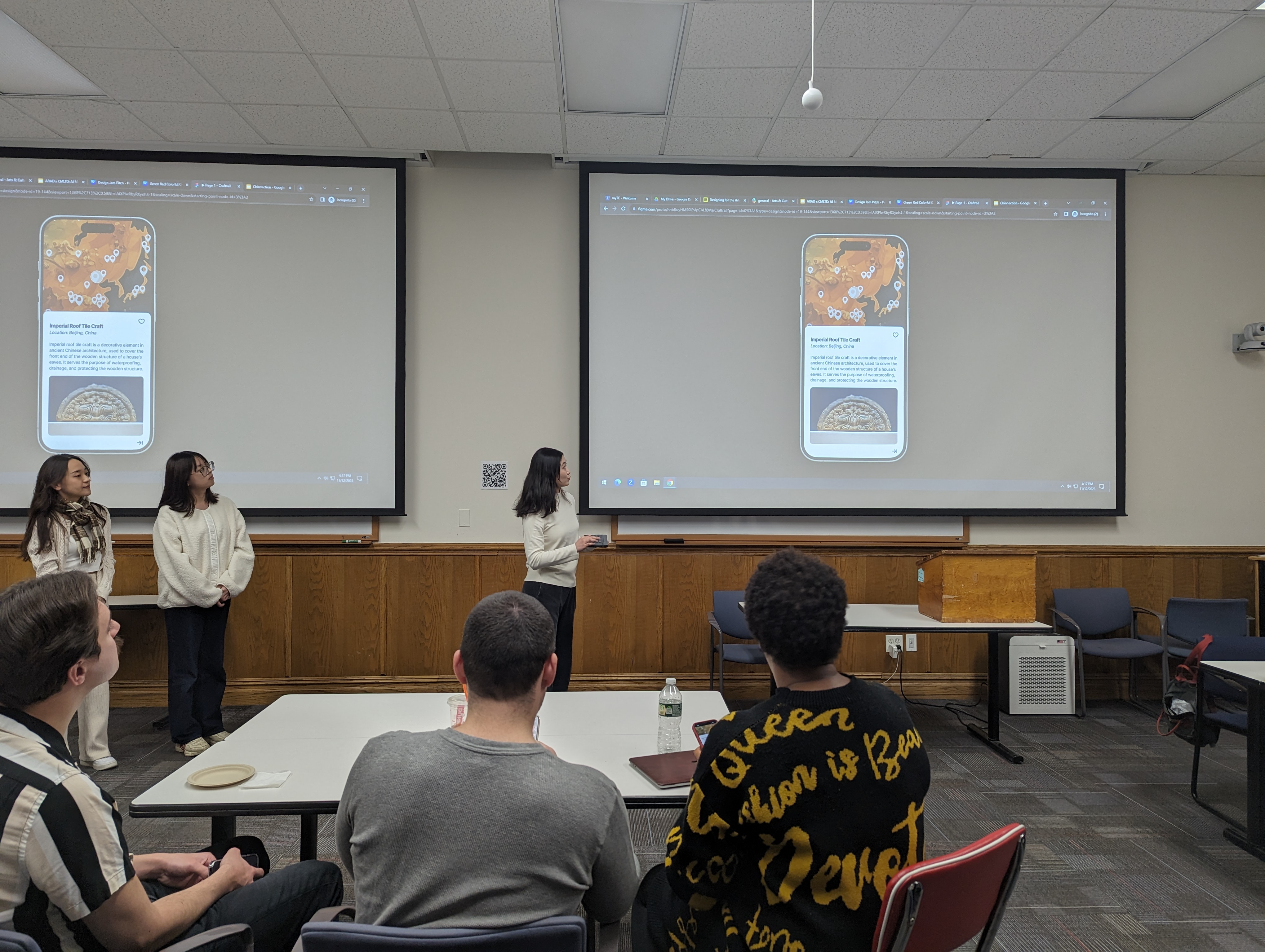
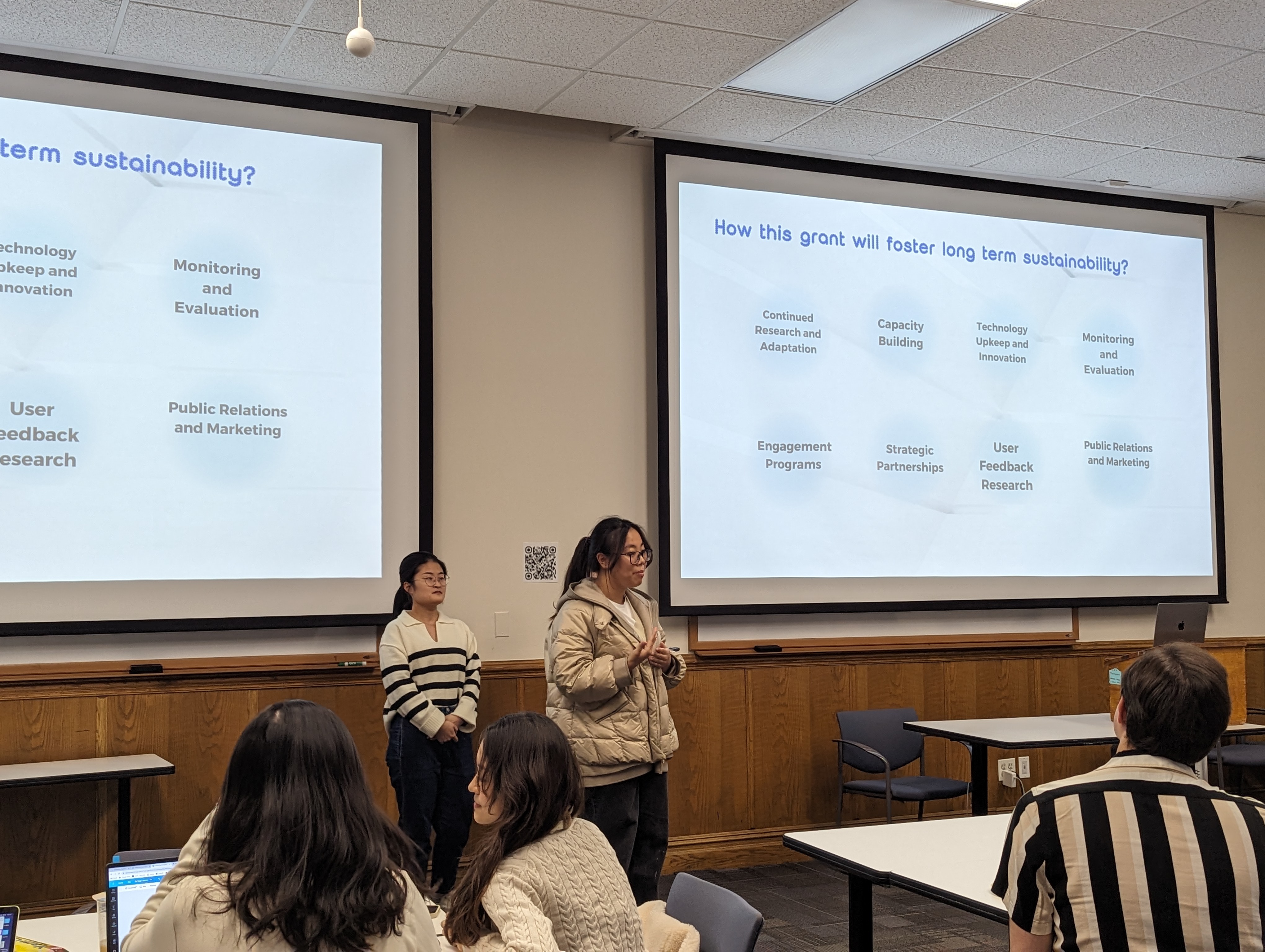
Across the three workshop days culminating in a paneled showcase series of pitch presentations, students were guided not only in design thinking, but also in presentation and communication skills. Storytelling and building compelling narratives lay the foundation for pitching their ideas, and fluency and experimentation with the tools they used to create their prototypes and support their narratives were imperative to constructing their pitches. Each group presented their final pitch presentation in front of a panel: Dr. Davinia Gregory-Kameka, ARAD Assistant Professor, Matthew Barnett from The New-York Historical Society, and Paul Nissenbaum from The Metropolitan Museum of Art. “The students’ ideas were so creative, and I never thought to use AI-generated images to identify factors in audience engagement that may seem more flat on paper”, said Matthew Barnett at the close of the pitch presentations. “I feel like I now have to go out there and tinker with these tools, for sure,” said Paul Nissenbaum, “and the work the students showed us today really showed a future of rethinking museums, organizations, and cultural institutions that is tech-integrated, forward-thinking, and empathetic.”

Student projects include: AI Museum Buddies, an augmented experience of chatting with AI renderings of artists and their personalities (Suzy Wang, Winnie Liu, Sadia Ahmed, and Sienna Lin); Chinnection, a mobile app helps Chinese teachers prepare and lead world history museum tour in the MET (Kelsey Shao, Mag Zhang, Ying Yang, and Yuhan Lu); Craftrail, a mapped global tapestry experience of learning and sharing traditional crafts around the world (Yixi Cao, Shirley Lyu, and Yiran Yuan); and ArtMingle.com, a social media platform for museum-goers to create an online community. Xuan An, ARAD ’25, shares her experience working with her CMLTD designer counterparts in the interview below.

What is your project about? How did you and your team members come up with this concept?
The inspiration of our project originated from: some contemporary young people who are interested in art, such as young people in the Z generation, do not want to go to art exhibitions alone due to loneliness or lack of understanding of art; but they do not know where to go. Find a companion to go with. Among this group, there are those who are experienced in art and those who are exposed to art for the first time; we want to build a website to help them find partners who want to watch exhibitions together. This concept comes from our daily life.
What was your favorite part of the design competition?
I liked the design thinking part the most. In design thinking, I learned how to define questions. The group members and I first started from the direction of art education and found problems from the phenomena around us. We found that some Gen Z don’t feel comfortable joining artistic activities alone, as they find their experience lacks self-expression and social connection.
We then discussed what, why is happening and what can be done to address this problem. To address this problem, our team intends to redesign their experience to reduce loneliness through meaningful, supportive interactions with others, and make it richer.
Starting from this basic purpose, we held a brainstorming session and classified the results using a taxonomy starting with “how might we” questions, leading to one main HMW question that broke down to many: HMW make them feel less lonely and make social connection easier? How might we, for example, build an online community for people with shared interests? Design a museum tour for these people? Would building a chat group about art be part of this? Would we have volunteers join the activities to navigate the socialization process? How large of a role does social media play in these interactions? For academically inclined museum-goers, how appealing would it be to hold online seminars and discussion sessions after visits? And in that line of thinking, how might we also encourage fostering communities around museums in purely social and recreational ways?
After deciding to build a website to help young people match partners to watch the exhibition, we began to think about what kind of interface we should use. I made a website sample by referring to NYFA’s screening page and combining it with the hare team page mentioned by one of my teammates from the CMLTD program, Cute.

What’s your favorite part about learning how to use new tools?
I especially like Miro and Slack!
Miro is a useful new tool that allowed me, and our group in general, to host a virtual, dynamic workspace on the website, allowing us to complete our overall plan conveniently and efficiently. Miro has a clear interface and rich functions. I very much look forward to continuing to use it in the future!
Slack is a useful new tool for me to use now, too! It allows participants to post tasks and discussions directly, and work team members to use the network to connect with each other. What I like most about it is the channel design. This design allows users to clearly see the requirements and classification of tasks. Slack made me more productive.
Even though this form of design thinking process is new to you and difficult, what are the rewards?
Our group included students majoring in arts administration as well as students majoring in Communication, Media, & Learning Technologies Design. Being part of the mixed team was rewarding and new, and we learned from each other. When group-thinking and designing for the ArtMingle project, as an ARAD student, I used my practical knowledge in arts management to provide support for the content of our proposal. This is both in terms of links with museums, galleries and galleries and in terms of fundraising, which I look forward to learning more about next semester.
CMLTD students have rich experience in using digital tools, for example, they know how to use Miro, Figma, and AI image generators. They helped me learn these tools, too, and we walked through the design process together on Slack, Miro and Figma. I feel that both majors have their own strengths and complement each other. Our cooperation was very pleasant, and I learned a lot of skills in using digital tools from the CMLTD majors in the team.
Do you think you will continue to work on the ArtMingle.com idea?
I will. I’m currently learning how to build my own web pages and add simple web page interactivity. Oral interviews were also conducted to understand other students’ perspectives on receiving arts education and socializing in an arts environment.

Photo Credit: Grace J. Choi
 Arts Administration
Leave a comment